
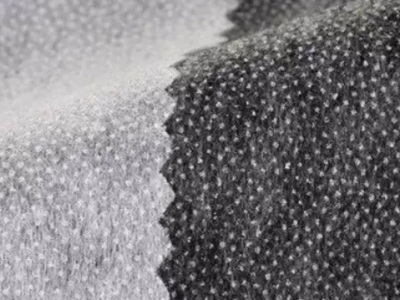
In the world of high-quality apparel and sophisticated tailoring, few components are as vital yet often overlooked as the interlining. Specifically, Woven Interlining stands out as the gold standard for adding structure, support, and longevity to garments. Unlike its non-woven counterparts, the woven variety maintains the grain of the outer fabric, ensuring stability and a smooth, professional finish that is crucial for structured pieces like suits, coats, and formal wear. This comprehensive guide, written for textile professionals and discerning tailors, will delve into the technical aspects of selection, application best practices, and the critical durability factors that make this material indispensable in achieving a superior final product.
Understanding the Fundamentals: What is Professional-Grade Woven Interlining?
Construction, Characteristics, and Technical Definition
Woven Interlining is a textile material engineered to be placed between the facing and the lining of a garment, constructed using traditional weaving methods (warp and weft threads interlaced). This construction method provides unparalleled dimensional stability and resilience, allowing the interlining to mimic the natural movement and drape of the main fabric. The resulting product is structurally sound, capable of preventing premature creasing, stretching, and distortion in key stress areas such as collars, cuffs, and jacket fronts. The technical definition requires its fibers—often cotton, polyester, rayon, or blends—to be integrated into a stable web, ensuring the final garment retains its shape throughout its lifecycle. This deliberate structure is what differentiates it, providing memory and recovery capabilities essential for high-end tailoring. Achieving this balance of support and flexibility demands precise control over the thread count and weave pattern during manufacturing, contributing significantly to the garment’s perceived quality and hand-feel.
- Structural Integrity: The interlaced threads provide inherent resistance to stretching, especially along the bias, which is crucial for maintaining the intended silhouette of tailored clothing.
- Fusibility Options: Many professional-grade woven products feature a thermoplastic adhesive coating, known as woven fusible interlining, which bonds permanently to the outer fabric under controlled heat and pressure.
- Matching Grainline: Due to its woven structure, it can be cut precisely on the straight-of-grain to align perfectly with the shell fabric, eliminating potential bubbling or sagging post-application.
- Breathability: High-quality cotton or rayon-blend woven interlinings retain excellent breathability, preventing moisture buildup and maintaining wearer comfort, a vital detail in bespoke tailoring.
The Critical Role of Interlining in Garment Structure and Drape
The primary function of Woven Interlining transcends mere support; it is the unseen scaffolding that defines the garment’s aesthetic success. For a tailor, the interlining controls the "handle" and "stand" of the fabric, transforming a limp piece of cloth into a three-dimensional form with engineered grace. This is particularly evident in the chest piece and lapels of a suit jacket, where the interlining dictates the elegant roll and smooth transition of the fabric. It acts as a buffer against abrasion and wear, distributing stress evenly across the fabric panel. Without this crucial layer, a fine wool suit jacket would quickly lose its tailored edge, becoming saggy and unstructured. The selection process is therefore an exercise in predicting the finished garment's behavior, ensuring the interlining's stiffness, weight, and resiliency complement the outer fabric's characteristics, guaranteeing the longevity and aesthetic appeal expected of premium apparel.
- Shape Memory: Provides the necessary resilience for fabric to return to its original form after being creased or stretched during wear.
- Aesthetic Enhancement: Smooths out the appearance of the outer fabric, concealing minor imperfections and creating a luxurious, even surface finish.
- Edge Stabilization: Prevents raw edges and seam allowances from fraying or rolling, particularly during high-stress operations like buttonhole stitching and edge finishing.
- Drape Control: Influences how the fabric hangs and flows on the body, adding necessary volume or substance where the design demands a specific silhouette.
Selection Mastery: Matching Woven Interlining to Specific Fabric Needs
Choosing the Best weight woven interlining for lightweight fabrics
Selecting the Best weight woven interlining for lightweight fabrics requires a nuanced understanding of textile physics, as the wrong choice can easily overwhelm a delicate material like silk, chiffon, or fine voile, causing stiffness, boardiness, or visible marks (known as strike-back or strike-through). For these delicate applications, the interlining must possess minimal mass and a soft hand-feel, often utilizing sheer or very fine denier yarns. The key challenge is to achieve structural support without altering the fabric's natural fluidity and lightness. This often involves selecting a single-dot coated fusible interlining with low activation temperatures to prevent damage to heat-sensitive materials. The goal is to ensure the interlining provides subtle, invisible support, allowing the lightweight fabric to maintain its airy movement while gaining the necessary resilience to withstand cutting, stitching, and pressing processes. A common professional strategy is to always test the interlining application on a fabric scrap to confirm the bond strength and aesthetic outcome before full-scale production, prioritizing a featherlight yet firm hold.
- Weight Consideration: Interlining weight must be less than or equal to the face fabric weight to ensure the finished garment does not feel heavy or stiff.
- Soft Hand: Opt for interlinings with cotton or viscose content for maximum softness and drape consistency with delicate materials.
- Sheer Colors: Use light-colored or transparent interlinings to prevent show-through on sheer or light-colored shell fabrics.
- Low-Temp Adhesives: Essential for synthetic lightweight fabrics that are susceptible to scorching or heat damage during fusing.
Navigating the Difference between woven and knitted interlining
The Difference between woven and knitted interlining lies fundamentally in their fabric construction, which dictates their performance characteristics and suitability for different garment types. Woven Interlining, created by the interlocking of warp and weft yarns, offers exceptional stability and minimal stretch, making it ideal for highly structured garments where precision and form retention are paramount, such as lapels, collars, and waistbands. Its stability ensures that complex tailoring remains crisp and defined over time. Conversely, knitted interlinings (often tricot or circular knits) are constructed from interconnected loops of yarn, providing significant elasticity and flexibility. This stretch factor makes them perfect for use with highly elastic materials like jersey knits, stretch wovens, or garments designed for maximum comfort and freedom of movement, such as sportswear or casual knit dresses. The choice between the two is a direct functional decision: structure and stability demand woven; stretch and fluidity require knitted. Professional selection is therefore guided by the end-use and the amount of "give" required in the final product.
The following table highlights the key differentiating factors:
| Characteristic | Woven Interlining (e.g., Poly-blend Woven) | Knitted Interlining (e.g., Tricot) |
| Construction | Interlacing of threads (Warp/Weft) | Interlooping of yarns |
| Stretch/Elasticity | Minimal to None (High Stability) | High (Excellent stretch recovery) |
| Ideal Application | Tailored suits, coats, collars, structured hats | Knitwear, activewear, stretch denim, casual tops |
| Hand-Feel | Crisp, firm, supportive | Soft, fluid, pliable |
- Structural Alignment: Woven interlinings align perfectly with the grainline of woven outer fabrics, preventing differential stretching.
- Drape Compatibility: Knitted interlinings are essential for maintaining the inherent stretch and soft drape of knit garments without adding restrictive stiffness.
- Cost vs. Stability: While often having a higher base cost, the longevity and shape retention provided by woven materials offer superior long-term value in high-end pieces.
Expert Application Techniques for Structured Tailoring
A Professional Guide on How to apply woven fusible interlining to suit jackets
Understanding How to apply woven fusible interlining to suit jackets is a cornerstone of professional tailoring, as improper fusing is the primary cause of bubbling, blistering, and delamination, which ruin the garment’s aesthetic. The process requires meticulous preparation and control over three critical variables: heat, pressure, and dwell time. Before application, the interlining and fabric must be conditioned to the same humidity level to prevent shrinkage. The fusible side, coated with a heat-activated resin, must be placed against the reverse side of the shell fabric. Using a professional fusing press is highly recommended over a household iron, as it ensures uniform pressure across the entire surface. The recommended temperature range, typically 130°C to 160°C, must be strictly adhered to based on the interlining manufacturer’s specifications. Dwell time, the period of sustained heat and pressure, is equally important; too short, and the adhesive won't properly melt; too long, and the adhesive may flow through the fabric. After fusing, the components must be allowed to cool completely under pressure or lying flat before being moved. This cool-down period is when the adhesive fully cures and sets the permanent bond, a crucial step for the enduring structure of the suit jacket.
- Pre-Shrinkage: Always pre-shrink non-fusible woven interlinings by soaking and drying them to prevent post-sewing dimensional changes.
- Test Fusing: Perform a small test patch to verify the optimal heat and pressure settings for the specific fabric/interlining combination.
- Grain Alignment: Ensure the interlining's grain is perfectly parallel to the garment piece's grainline to prevent twisting and skewing.
- Cool-Down Phase: Never peel the fused material while hot; a minimum of 3-5 minutes of cooling time is required for the polymer to crystallize and set the final bond strength.
Performance Analysis: Durability, Comparisons, and Longevity
The Essential Woven vs non-woven interlining comparison
The Woven vs non-woven interlining comparison highlights the functional and qualitative difference between structural permanence and cost-effective flexibility. Woven Interlining, due to its thread-based structure, offers superior tensile strength, excellent recovery from stress, and a soft, natural drape, making it the choice for heirloom and premium garments where durability and appearance are paramount. Its initial application and cutting process are more demanding, but the stability it adds is unmatched. Non-woven interlining, conversely, is manufactured by bonding, needling, or thermally joining loose fibers into a mat. This construction makes it inexpensive, highly versatile, and easy to cut (no fraying), but it is inherently less durable and lacks the same shape memory. Non-woven materials are prone to delamination under intense cleaning and may develop a stiff, papery texture over time. While non-woven is excellent for quick, budget-conscious applications like minor crafts or disposable items, professional tailoring overwhelmingly relies on the sophisticated, long-lasting support of the woven variety to justify the premium cost and effort involved in garment construction.
The following comparison details the key attributes of both types:
| Attribute | Woven Interlining | Non-Woven Interlining |
| Construction Basis | Interlaced warp and weft threads | Randomly laid or parallel fibers (bonded) |
| Durability/Lifespan | High; maintains integrity through cleaning | Moderate; prone to stiffness or separation over time |
| Shear Stability | Excellent; resists distortion on the bias | Poor; stretches easily when pulled diagonally |
| Hand-Feel Match | Conforms well to the outer fabric's hand | Can feel stiff or papery, often masking the fabric |
- Fraying: Woven materials will fray when cut, requiring careful handling; non-woven materials do not fray.
- Cost: Woven options are generally more expensive due to the complex manufacturing process and higher quality fiber content.
- Application Range: Non-woven is frequently used in craft and bag making; woven is dominant in high-end apparel construction.
Insight into Poly-blend woven interlining durability test standards
The performance of Poly-blend woven interlining durability test protocols are essential for manufacturers to guarantee product longevity, particularly against the rigors of commercial garment care. A typical poly-blend interlining, often combining polyester for strength with cotton or rayon for a desirable hand-feel, must pass several key industry-standard assessments. These tests primarily focus on the adhesive bond strength (peel strength test), resistance to dimensional change (shrinkage test), and resilience against repetitive stress (laundering/dry-cleaning cycle test). The peel strength test is critical, measuring the force required to separate the fused interlining from the outer fabric after exposure to heat and moisture; a low result indicates a high risk of bubbling. The shrinkage test ensures the interlining does not shrink more than 1-2% after washing or steaming, which would cause the garment to pucker. Furthermore, the Poly-blend woven interlining durability test often includes standardized rub resistance and tensile strength assessments to ensure the material can withstand constant friction and strain over the garment's lifetime. These rigorous standards ensure that the interlining contributes to, rather than detracts from, the overall durability of the finished product.
- Peel Strength: Tested using calibrated equipment, typically requiring a minimum force (e.g., 2.5 N/cm) to confirm a satisfactory and lasting bond.
- Wash/Dry-Clean Cycles: The material must retain its physical properties and adhesion after 5 to 10 industry-standard care cycles without loss of support.
- Resilience (Wrinkle Recovery): Tests measure the interlining's ability to help the face fabric resist and recover from creasing, using standardized angle measurements.
- Heat Resistance: Evaluation of the interlining's stability at high temperatures to ensure it remains pliable and does not melt or become brittle during pressing.
FAQ (Frequently Asked Questions)
What are the primary differences between single-dot and double-dot fusible Woven Interlining?
The distinction between single-dot and double-dot fusible Woven Interlining relates to the density and application of the adhesive resin coating. Single-dot coatings feature a lower density of adhesive particles, resulting in a lighter-weight bond with a softer hand-feel. This type is generally preferred for very lightweight, delicate, or sheer fabrics, as the reduced adhesive quantity minimizes the risk of strike-through (adhesive showing on the face of the fabric) and maintains the fabric’s natural drape. Double-dot coatings, by contrast, apply a higher density of adhesive resin, creating a stronger, more robust, and permanent bond. Double-dot interlinings are the professional choice for heavier fabrics, such as wool suitings or heavy cottons, where maximum stability and a firm, crisp finish are required. The greater adhesive quantity allows the interlining to effectively support the weight of the outer fabric and withstand repeated industrial cleaning processes, thereby ensuring superior garment longevity and shape retention, a key factor in boosting long-term SEO visibility for technical product queries.
Can Woven Interlining be used effectively with stretch fabrics, and if so, how does it affect the stretch?
While Woven Interlining is inherently stable and offers minimal natural stretch, it can be strategically used with stretch fabrics, though it requires specific techniques to avoid restricting the garment’s intended movement. The standard application is to use it in areas where stretch is explicitly unwanted or needs to be controlled, such as along the edge of a jacket opening, collar bands, or button plackets, to prevent stretching and distortion during wear and handling. In these applications, the woven stability acts as a built-in stabilizer. If the goal is to stabilize while retaining some movement, a specialty bi-elastic poly-blend woven interlining durability test certified material may be used. Furthermore, if a designer insists on using a standard woven material on a stretch shell fabric, it must be cut carefully off-grain (or on the bias) to introduce a degree of mechanical give, which somewhat mitigates the restrictive nature of the weave structure. This careful balancing act of stabilization versus flexibility is critical for high-end stretch apparel, directly impacting customer satisfaction and repeat searches for quality tailoring components.
What causes bubbling or delamination when I apply woven fusible interlining to suit jackets?
Bubbling or delamination is almost always a sign of a compromised bond, resulting from a failure to control one or more of the critical fusing parameters (heat, pressure, or time). The most common root causes when you apply woven fusible interlining to suit jackets involve insufficient pressure, allowing air pockets between the interlining and the shell fabric, or a failure to allow for complete cooling. If the pressure is too low, the molten adhesive will not be properly forced into the fabric fibers, creating a weak mechanical link. Another frequent issue is insufficient heat or dwell time, preventing the entire adhesive layer from reaching its activation temperature and properly melting. Conversely, excessive heat can cause the adhesive to degrade or "strike-through." Furthermore, professional materials should be matched in composition: for example, a high-quality cotton suit fabric should ideally be matched with a compatible woven vs non-woven interlining comparison winner—a natural fiber or appropriate poly-blend woven interlining durability test approved option—to ensure similar rates of moisture absorption and heat expansion, reinforcing the professional depth of this SEO content.

English
Español
Türk
简体中文


