1.Texturizing
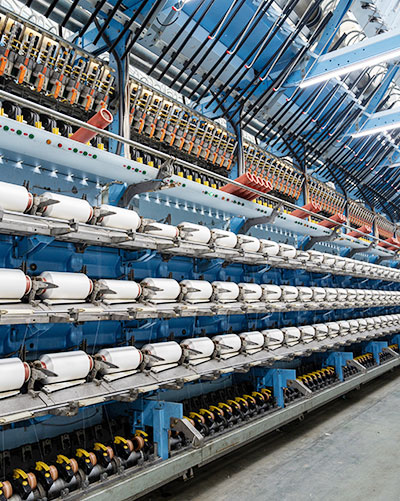
Texturizing uses heating, drawing and false-twist processing to convert polyester POY into DTY yarn with bulk and stretch characteristics. The result depends on the raw material and processing conditions.
Enhancing Every Garment
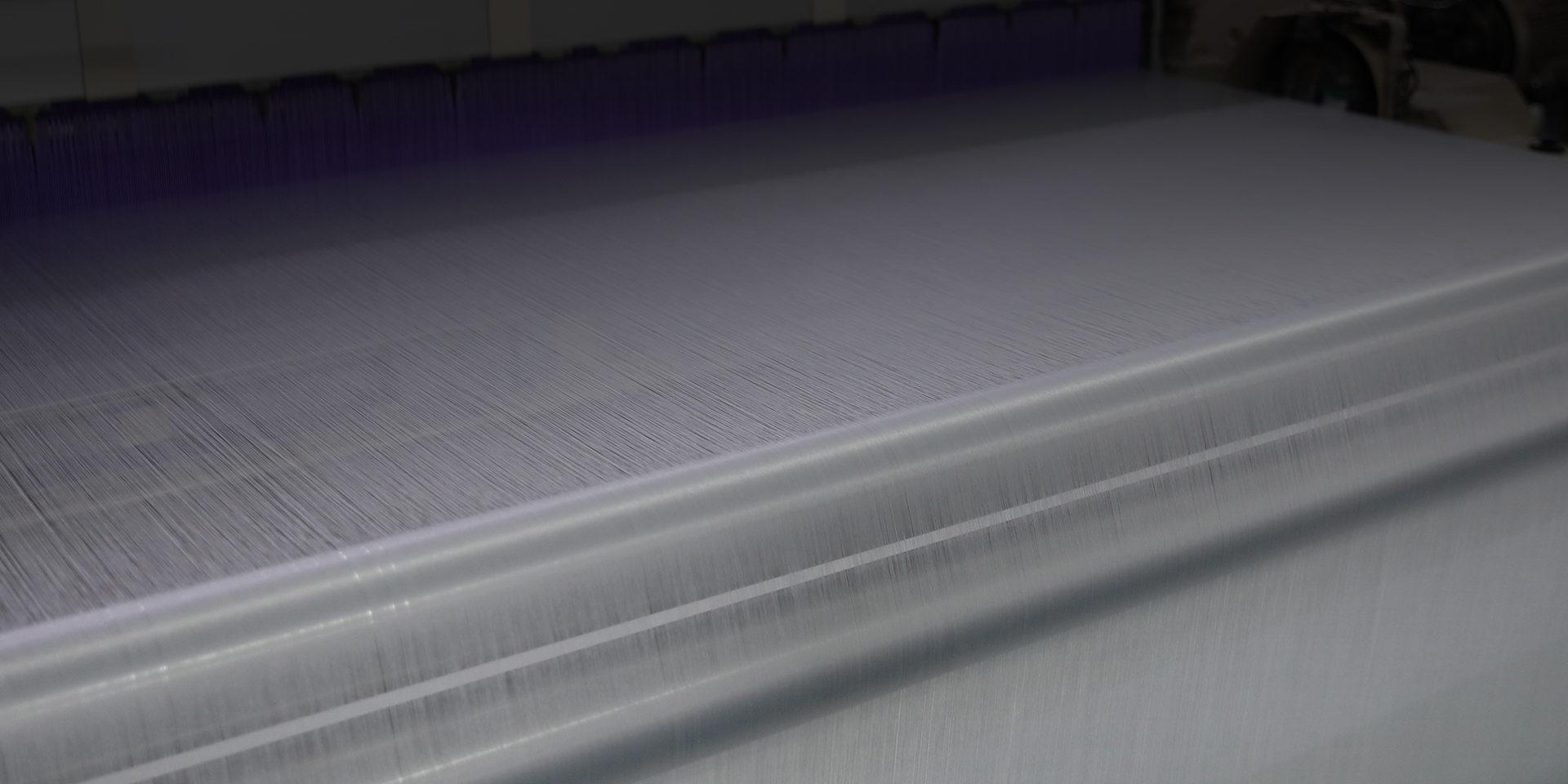
Production activities include yarn processing, warping, weaving, washing, heat setting and coating. Processes are managed for the relevant product requirements. Technical parameters and test results should be confirmed for the selected model and production records.
Texturizing uses heating, drawing and false-twist processing to convert polyester POY into DTY yarn with bulk and stretch characteristics. The result depends on the raw material and processing conditions.
Warping arranges and winds yarn onto a warp beam according to weaving requirements. Yarn arrangement and tension are managed for the selected product and actual process settings.
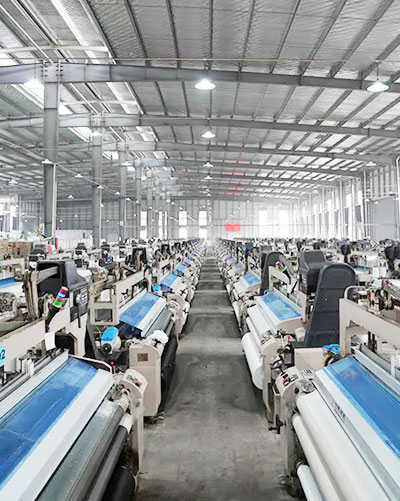
Weaving interlaces warp and weft yarns to form the base fabric. Equipment speed, fabric defects and other process indicators should be confirmed from the relevant model and production records.
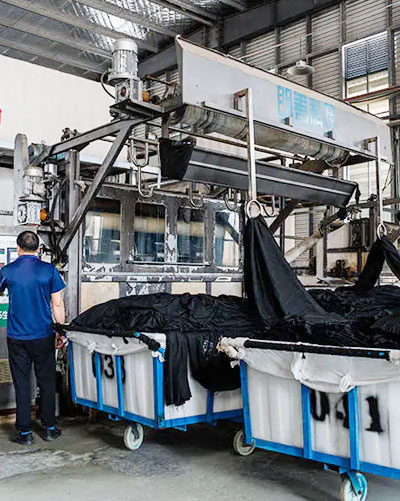
Washing helps remove some oils and impurities from the base fabric before further finishing. Temperature, time and process settings depend on the material, fabric structure and product requirements.
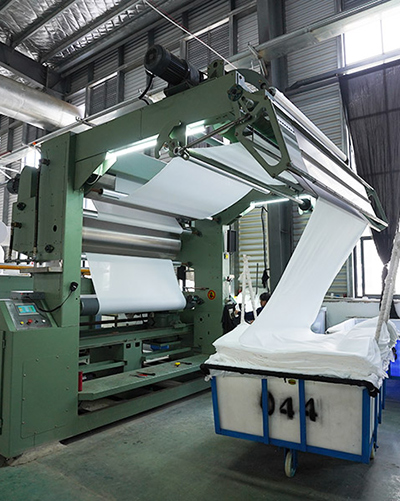
Heat setting combines temperature, tension and width control to finish the base fabric. Dimensional stability should be assessed for the selected model using the relevant test method and results.
Coating applies adhesive to the base fabric according to product requirements, including double-dot systems where specified. Bonding and care performance depend on the model, shell fabric and process; test under actual production conditions.
UBL teams collaborate on interlining development, production, quality management and customer service. Model selection and sample trials are discussed in relation to the shell fabric, garment construction and intended care process.
Technical and commercial staff coordinate discussions of model selection, production requirements and sample testing.
Sample and development arrangements depend on materials, models, quantity and scheduling. Share your fabric, garment application and care requirements to discuss the available options and lead time.
Staying abreast of the latest industry trends to strengthen technological reserves.
UBL combines production control, product testing and batch traceability to support consistent interlining quality. Selection should be confirmed with the intended shell fabric, garment construction and care process.
For certification requirements, contact us for the applicable documents, product scope and validity information before ordering. Request quality and certification information.
Quality checks cover relevant stages before, during and after production. Discuss the tests and acceptance criteria required for your selected model and intended garment application.
Production records and roll identification support batch traceability. Retain the roll label and batch reference so that an enquiry can be linked to the relevant production information.
For a quality enquiry, provide the product model, roll or batch reference, shell-fabric details, production or fusing conditions, care process and photographs of the issue. These details help our team review the case and discuss the next steps.
Delivery arrangements depend on production scheduling, stock availability, destination and transport conditions. Confirm the expected dispatch date, arrival estimate, transport method and costs for the specific order.
The company adopts a dual-factory strategic layout, establishing an East China base in Jiashan, Zhejiang, and a Central China base in Wannian, Jiangxi, forming a production and distribution network covering the core economic circles of East and Central China. This geographical layout shortens transportation radii from the source, providing a foundation for responsive service to regional customers and reducing delivery fluctuation risks associated with long-distance transportation.
Transit and delivery times vary by stock status, production schedule, destination, carrier arrangements and transport conditions. Discuss any special timing requirements before ordering; confirmed arrangements are order-specific.
Stock records and customer production plans are used to coordinate preparation and dispatch. Warehousing and delivery arrangements should be confirmed for the product, quantity and order requirements.
Factory locations, production plans and transport resources are considered when coordinating delivery. Confirm expected lead times and service scope for each order.