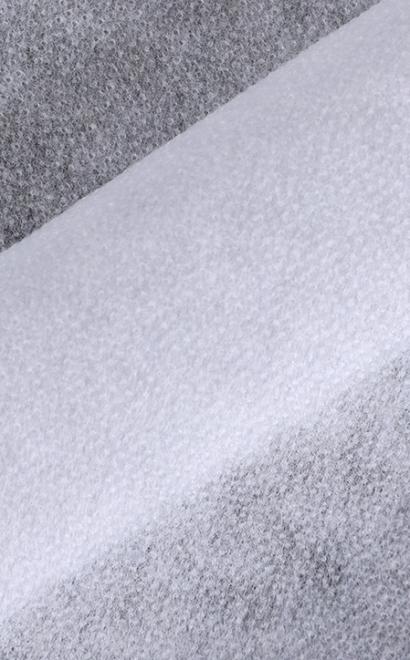

Woven Interlining
Enhancing Every Garment

Start with the area that needs support and the hand feel you want to retain. For a lightweight petticoat or skirt, assess the interlining together with the actual shell fabric rather than choosing by weight alone.
Compare UBL's Series 9 nylon nonwoven interlining and H7 woven fusible interlining specifications for the selected model. Consider opacity, drape, stretch and the required support at the waistband, opening or other reinforcement area. A sample comparison helps establish whether a construction suits your garment.
For a fusible model, trial bonding and surface appearance on your fabric and equipment, then evaluate dimensional change and appearance after the intended care process. Confirm the processing guidance and test requirements for that specific combination before bulk production.
Ask UBL about petticoat interlining selection and samples. Include your fabric composition and weight, garment area, target hand feel, care process, required width, estimated quantity and destination. You can also review the nonwoven interlining range.
Use the Series 9 nylon nonwoven interlining model table to compare the available specifications. Choose a candidate model for the support and hand feel required in your petticoat or skirt, then assess it with your actual garment fabric.
Evaluate drape, opacity, surface appearance and dimensional change. For a fusible model, confirm bonding and appearance after the intended care process. Any breathability, moisture-management or next-to-skin requirement needs a relevant test for the selected construction; it should not be inferred from low weight or nylon content alone.
For a sample enquiry, send your fabric details, garment area, care process, target hand feel and estimated quantity. Contact UBL to discuss model information and samples.