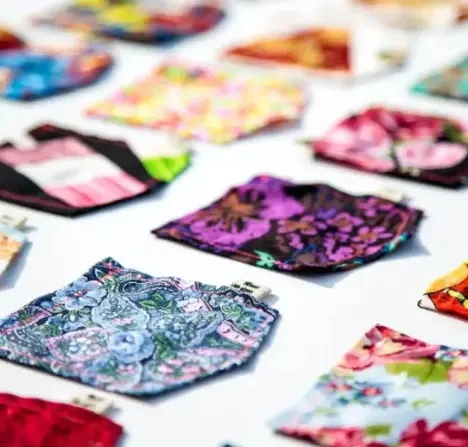
In the world of garment construction, many of the fabrics we notice on the outside are only part of the story. Worn but unseen, interlining fabrics play a critical role in how clothing looks, fits, and performs. Whether it’s the crisp front of a tailored jacket or the reinforced placket of a shirt, interlinings give structure, stability, and a professional finish to finished garments.
What Are Interlining Fabrics?
Interlining fabrics (also called interfacing in some regions) are materials used between the outer fabric and the garment lining to support, reinforce, or shape certain areas. They are not part of the visible exterior, yet they strongly influence the garment’s structure and durability.
Primary Functions
- Reinforcement: Strengthening areas such as collars, cuffs, waistbands, and button plackets.
- Shape retention: Helping garments hold intended silhouettes.
- Support: Preventing garment edges from stretching or sagging.
- Texture control: Adding stiffness or softness depending on design needs.
Interlinings can be woven, non-woven, or knit fabrics, with different weights, elasticity, and methods of application (sewn or fused).
How Were Interlining Fabrics Discovered?
The exact moment of discovery isn’t documented like some major inventions, but interlining developed gradually alongside tailoring traditions.
Historical Roots
The concept of reinforcing clothing has existed for centuries:
- Ancient Tailoring: Early garments often used extra fabric layers to strengthen areas prone to wear.
- 19th Century Tailoring: With the rise of structured garments (suits, corsets), tailors began using specialized fabrics between layers for shape.
- Industrial Revolution: Mass production of woven textiles and new adhesives created opportunities for standardized interlinings.
It was during the late 1800s to early 1900s, as industrial tailoring advanced, that interlinings became a distinct category—separate from outer fabrics and linings. Innovations in chemistry and textile engineering enabled adhesive treatments that allowed fabrics to be fused to garment facings, rather than just sewn in.
Who First Applied Them to Clothing?
While no single inventor of interlining fabrics is recorded, the evolution of professional tailoring houses in Europe and America drove early adoption:
- Savile Row Tailors (London): Famous for structured suits; likely among the first to formalize interlining use in bespoke garments.
- Industrial Manufacturers (U.S. & U.K.): Companies producing fuse-able materials for shirt fronts and suit jackets helped spread usage beyond custom tailoring into ready-to-wear fashion.
Over time, manufacturers developed proprietary interlinings optimized for different materials and functions, making them an industry staple.
Types of Clothing Best Suited for Interlining Fabrics
Interlinings are used wherever structure, stability, aesthetic precision, or reinforcement is needed.
Common garment categories include:
Tailored Jackets & Coats
- Used for lapels, fronts, shoulders, and collars
- Provides shape and prevents sagging
Dress Shirts
- Collar stands and plackets often use lightweight interlining
- Helps collars hold shape and bow ties lay flat
Waistbands & Trousers
- Prevents stretch and deformation
- Helps keep waistline crisp
Dresses & Skirts
- Adds body to facings or waist stays
- Supports zippers and closures
Formal Wear
- Tuxedo fronts, waistcoat (vest) linings, and gown bodices use interlining for crisp, elegant lines
Specialty Apparel
- Uniforms, military dress coats, and performance costumes benefit from reinforced areas that maintain shape under stress
Techniques for Applying Interlining Fabrics
Two primary methods are used to apply interlining:
Sewn-In Interlining
This traditional technique involves physically stitching the interlining to the garment fabric at specific points.
Pros
- More flexible — ideal for complex shapes
- Better for fabrics that can’t be heat-fused
Cons
- Extra sewing time
- May require skillful tailoring to avoid puckers
Fusible Interlining
Fusible interlining has a heat-activated adhesive on one side. With an iron or a press, it bonds to the garment fabric.
Pros
- Faster to apply
- Smooth, uniform adhesion
Cons
- Heat can damage delicate fabrics
- Must match garment fabric properties for best results
In practice, many garments today use fusible interlinings for efficiency, particularly in mass production, while bespoke and heavyweight garments still rely on sewn-in layers.
Comparison: Interlining vs. Other Clothing Materials
| Feature |
Outer Fabric |
Lining |
Interlining |
| Visible in finished garment |
✅ |
Sometimes |
❌ |
| Provides structure |
❌ |
❌ |
✅ |
| Adds strength |
❌ |
❌ |
✅ |
| Affects garment shape |
Minimal |
Minimal |
Significant |
| Aesthetic contribution |
Primary |
Secondary |
None (functional only) |
Interlining vs. Reinforcements
- Reinforcement patches provide local support but don’t shape broad areas
- Interlining fabrics can shape curves, prevent stretch, and reinforce seams more holistically
Why Choose Interlining Fabrics?
Garments use interlining for key benefits:
- Better Fit and Shape Retention: Interlinings help garments maintain smooth lines and structure, especially in formalwear.
- Increased Durability: Reinforced areas resist deformation and wear over time.
- Professional Finish: Collars stay sharp, plackets lie flat, and garment edges hold crisp lines.
- Improved Comfort: By stabilizing areas like waistbands or necklines, interlinings prevent irritation and drag.
- Versatility: Different interlining types suit lightweight shirts to sturdy outerwear.
Though often invisible, interlining fabrics are fundamental to both fashion and function in garment construction. They emerged from centuries of tailoring innovation and are now integral in everything from everyday shirts to high-end bespoke suits.