Enhancing Every Garment

When discussing the art of tailoring, it is easy to focus on the luxurious fabrics, the precision of the cuts, and the final polished silhouette. Yet, beneath the visible surface lies a crucial structural component that gives life to the garment. That invisible foundation is Hair Canvas Interlining. Without it, many of the world’s most iconic suits, jackets, and coats would lack the body, resilience, and durability they are celebrated for.
The use of interlining in garment construction is not a new invention. For centuries, tailors have relied on hidden support fabrics to ensure their creations drape properly and maintain structure even after years of wear. Among the many varieties of interlining available, Hair Canvas Interlining has earned its reputation as the standard of excellence. Crafted traditionally with horsehair, wool, and linen, it possesses qualities that are difficult to replicate with synthetic alternatives.
The true magic of Hair Canvas Interlining lies in its ability to merge structure with fluidity. It holds the garment firm, yet still allows movement. This balance between rigidity and flexibility is what elevates a tailored jacket from merely good to undeniably exceptional.
Hair Canvas Interlining is a woven fabric specifically engineered to serve as a hidden support system within tailored garments. Its traditional composition includes horsehair for bounce and resilience, wool for softness and warmth, and linen for strength. When woven together, these fibers create a textile that can be shaped and molded, while also standing the test of time.
This material is often cut and placed inside jackets, coats, or dresses in key structural areas such as lapels, chest panels, collars, and shoulders. Unlike fusible interlinings that rely on adhesives, traditional hair canvas is hand-stitched or basted into the garment, giving the tailor greater control over shape and form.
The superiority of Hair Canvas Interlining is particularly evident in full-canvas construction. In such garments, the interlining runs throughout the entire front panel, providing a luxurious drape and ensuring that the garment will mold to the wearer’s body over time. Half-canvas variations still utilize hair canvas but combine it with other interlinings for efficiency and cost-effectiveness.
Hair Canvas Interlining can be categorized by fiber composition and application method.
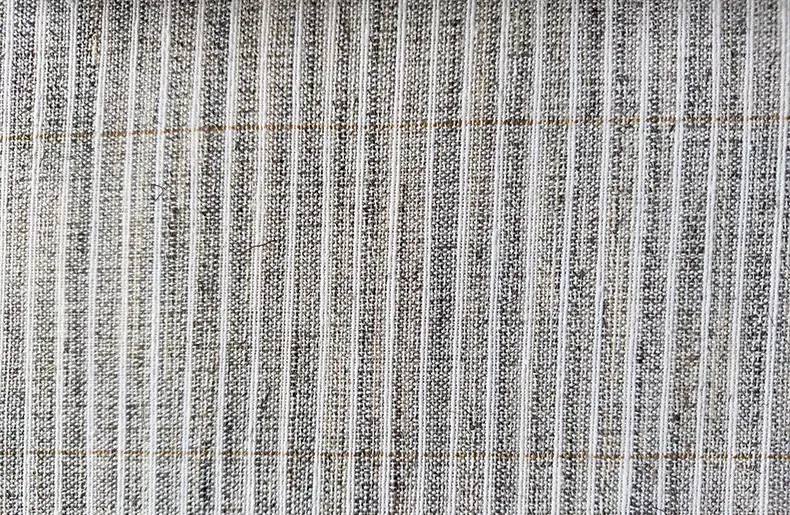
Incorporating Hair Canvas Interlining in tailoring offers numerous advantages.
The following table highlights the benefits of Hair Canvas compared to garments without interlining:
| Feature | With Hair Canvas Interlining | Without Interlining |
|---|---|---|
| Structure and Shape | Defined and long-lasting | Soft, lacks support |
| Drape Quality | Smooth, natural, elegant | Sagging, uneven |
| Durability | Resistant to wear and tear | Wears out quickly |
| Professional Appearance | Crisp, tailored look | Informal, unfinished |
Selecting the most suitable Hair Canvas Interlining depends on fabric, garment type, and desired outcome.
The process of using Hair Canvas Interlining requires meticulous craftsmanship:
This labor-intensive process is what makes bespoke tailoring so revered. Each stitch ensures that the garment does not just fit but truly complements the wearer’s form.
Although its most famous use is in suits, Hair Canvas Interlining has far-reaching applications.
In addition, some experimental designers have begun incorporating Hair Canvas Interlining into avant-garde fashion. Its structural qualities allow for sculptural shapes and innovative silhouettes that hold form without collapsing. This opens the door for modern uses far beyond traditional menswear.
Understanding how Hair Canvas Interlining compares with alternatives helps highlight its superiority.
| Feature | Hair Canvas Interlining | Fusible Interlining | Non-Woven Interlining | Woven Interlining |
|---|---|---|---|---|
| Structure | Strong, moldable, firm | Varies, may be stiff | Often stiff, paper-like | Flexible |
| Drape | Excellent, natural flow | Can appear boardy | Limited fluidity | Good drape |
| Durability | Extremely long-lasting | May bubble/delaminate | Degrades over time | Durable |
| Application Method | Hand-basted or fusible | Heat-activated | Sew-in or iron-on | Sew-in or iron-on |
| Common Use | Suits, coats, tailoring | Ready-to-wear | Crafts, bags | General garments |
The use of Hair Canvas Interlining is deeply tied to the history of tailoring itself. In European bespoke houses of the 19th century, the mastery of canvassing techniques distinguished apprentices from true tailors. Knowledge of how to manipulate canvas was considered a guarded craft secret, passed down through generations. Even today, when machinery and mass production dominate the fashion world, artisans continue to use hair canvas in order to uphold tradition and ensure garments meet the highest standards.
In addition, its relevance extends into costume design and heritage fashion. Historical reproductions often require authentic construction methods, and the inclusion of Hair Canvas Interlining ensures garments reflect their period-accurate structure.
Even as modern fashion evolves, the role of Hair Canvas Interlining remains essential. While fusible and synthetic interlinings offer convenience, they often lack the longevity and refined aesthetic of traditional canvassing. For garments meant to last decades and symbolize craftsmanship, there is no true substitute.
Designers who prioritize sustainability are also returning to hair canvas. Because it is made of natural fibers, Hair Canvas Interlining aligns with eco-conscious tailoring. Unlike purely synthetic fusibles that may degrade faster and end up as waste, hair canvas garments often outlive their owners, becoming heirlooms passed through families.
The secret to a suit that feels alive, a jacket that molds to the body, and a coat that retains its elegance lies in Hair Canvas Interlining. It is not merely a fabric layer but a symbol of tailoring heritage. For those who seek garments that endure, garments that move gracefully, and garments that exude professionalism, this interlining remains irreplaceable.
In a world where fast fashion dominates, choosing to work with Hair Canvas Interlining is a commitment to tradition, quality, and the artistry of tailoring. For the discerning tailor and the wearer who values timeless elegance, this hidden layer is indeed the most vital secret of professional tailoring. Its legacy bridges the past with the present, ensuring that the art of fine tailoring continues to thrive for future generations.