Enhancing Every Garment

When discussing the details that make a garment look professional, polished, and durable, most people think of high-quality fabrics, precise cutting, and skilled stitching. Yet there is an invisible hero in fashion and textile production: Woven Interlining. This material, although hidden between layers, plays one of the most critical roles in garment construction. It ensures that collars remain sharp, waistbands stay firm, and cuffs hold their shape over time. Without it, even the most carefully designed garments risk looking unfinished or unprofessional.
Woven Interlining is not just an accessory textile; it is a foundation of structured garment design. Tailors, textile engineers, and fashion designers all recognize its importance. From couture gowns to industrial uniforms, this special material adds resilience, functionality, and a refined finish.
At its core, Woven Interlining is a woven textile produced using warp and weft threads, similar to the main fabrics used in clothing. Unlike non-woven interlinings, which are pressed fibers without a grain, woven types behave like actual fabric. This makes them far superior for applications that demand both strength and flexibility.
Because woven interlining is cut along the fabric grain, it mirrors the drape and flow of the outer textile. When integrated properly, it becomes practically invisible, yet its impact on garment quality is unmistakable.
Scientific Explanation: The woven construction distributes tension evenly across both warp and weft threads. This balance prevents distortion when garments are worn and washed, ensuring long-lasting stability.
The primary reason professionals prefer Woven Interlining is that it does not alter the natural hand of the fabric. Instead, it enhances strength while maintaining flexibility. Non-woven interlinings can sometimes feel stiff, brittle, or paper-like, which reduces comfort.
Benefits of Woven Interlining include:
Whether you are working on a lightweight silk blouse or a heavy wool overcoat, there is a woven interlining designed to match.
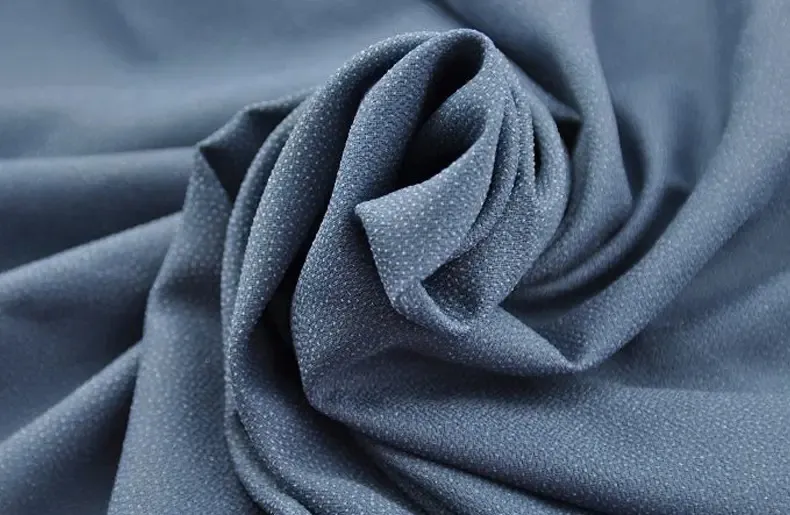
When you hold Woven Interlining up to the light, you will notice a clear woven grid structure. The threads run lengthwise and crosswise, forming a fine fabric-like appearance. Unlike non-woven types, which can be cut in any direction, woven interlining has a grain and must be cut accordingly.
This distinction is essential: cutting off-grain may distort the garment, causing puckering or uneven drape. By respecting the grain, you ensure that both fabric and interlining move as one.
This type features a heat-activated adhesive on one side. By applying heat and pressure, it bonds permanently with fabric. Fusible woven interlining is extremely popular in modern garment factories due to its speed, efficiency, and clean finish.
Used in couture and luxury tailoring, this type does not rely on adhesives. Instead, it is stitched into the garment structure. This method is ideal for delicate or heat-sensitive fabrics that cannot tolerate ironing. It also offers more flexibility, maintaining a natural fabric hand.
When selecting Woven Interlining, consider three essential factors:
Both fabric and Woven Interlining must be pre-washed to prevent uneven shrinkage. This is critical for garments that will undergo frequent laundering.
| Problem | Likely Cause | Solution |
|---|---|---|
| Bubbling or wrinkling | Incorrect fusing technique | Re-press at correct temperature using pressing cloth |
| Peeling after washing | Poor adhesive bonding | Pre-wash fabrics and reapply with more pressure |
| Visible texture on fabric surface | Wrong interlining weight or color | Select lighter or matching shade interlining |
By anticipating these issues, you can avoid costly mistakes and ensure a professional finish.
Choosing the right interlining often comes down to woven versus non-woven varieties.
| Feature | Woven Interlining | Non-Woven Interlining |
|---|---|---|
| Structure | Warp and weft threads | Random fibers pressed |
| Grain | Must follow fabric grain | No grain, cut any direction |
| Flexibility | Fabric-like drape | Can be stiff, paper-like |
| Applications | Garments, tailoring, couture | Crafts, quilting, bag-making |
Conclusion: For professional garment construction, Woven Interlining is almost always the superior choice.
Textile engineers optimize Woven Interlining through:
This continuous research ensures modern interlinings meet the demands of industrial-scale production while adapting to eco-friendly textile innovations.
As sustainable fashion grows, Woven Interlining is also adapting:
This makes woven interlining compatible with ethical garment production and circular fashion models.
Woven Interlining is more than just a hidden layer—it is a structural backbone of garments. It ensures longevity, beauty, and professional quality in every piece of clothing. By understanding its types, applications, and correct usage, designers and sewers can transform their projects from amateur to professional.
Whether you are creating delicate evening gowns, durable uniforms, or everyday shirts, the careful use of Woven Interlining guarantees superior results. Its versatility, scientific engineering, and adaptability to sustainable practices make it one of the most important innovations in textile design.
For those serious about garment construction, mastering Woven Interlining is not an option—it is a necessity.