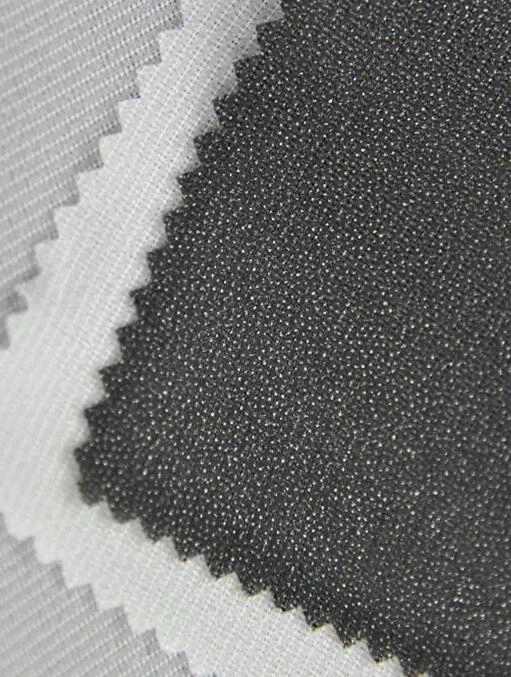
The function and performance of the belt use uncoated
Woven Interlining; non-woven interlining, also known as non-woven interlining, paper interlining, interlining, is based on non-woven fabrics, and is processed by special processes such as glue coating or resin finishing. to make. Made of lining. Non-woven interlinings were originally used directly as interlinings. Today, most have been replaced by bonded nonwoven interlinings. But it is still used in light casual clothing, knitted clothing, down quilted clothing and raincoats, children's clothing, etc. It is usually made by chemical bonding and is divided into three types: thin, medium and thick. Nonwoven interlinings (paper-based, interlining) have a wide range of applications. In addition to the properties of adhesive interlining, the uncoated woven interlining fabric used in the waist belt has the following characteristics:
1. Light weight
2. The incision does not fall off after cutting
3. Good shape retention
4. Good resilience
5. No rebound after washing
6. Good warmth retention
7. Good breathability
8. Compared with woven fabric, it has lower requirements on directionality and is easy to use
9. Cheap and economical
The role of non-woven interlining:
1. Fully bonded non-woven woven lining
The waistband uses an uncoated woven interlining, mainly on the front of the jacket. It has strong adhesion, good washing resistance, and can be bonded to the fabric, which can improve the sewing efficiency and promote the rationalization of the sewing process. In addition, it has great styling effect as a lining for knitted garments.
2. Partially bonded non-woven lining
The partially bonded nonwoven liner is processed (cut) into strips. The uncoated woven interlining for this belt is widely used in the hem of the garment as a reinforcing lining, and is used for the lining of small parts such as mouths, pockets, and cuffs. It is also used for the lining of larger parts such as necklines and plackets; it has the functions of preventing elongation, adjusting the fabric structure, and enhancing the stiffness of the clothing, so that the clothing has good shape retention and a smooth and beautiful appearance.