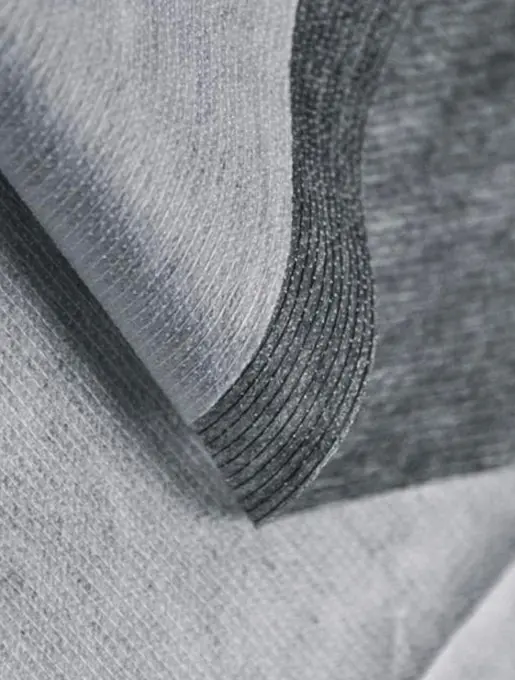
Enhancing Every Garment

In the world of textile manufacturing and garment construction, Quilting Woven Interlining serves as a crucial component that bridges the gap between fabric aesthetics and functional performance. This specialized material consists of a woven base cloth that undergoes precise quilting processes to create stable, dimensionally stable layers used primarily for reinforcement and structural enhancement. Unlike non-woven alternatives, woven interlining maintains the natural drape and flexibility of fabrics while providing consistent support across the entire textile surface.
The production of high-quality Quilting Woven Interlining involves sophisticated manufacturing techniques that ensure consistent performance and reliability. The process begins with selecting appropriate base materials and progresses through precise quilting operations that determine the final product's characteristics and application suitability.
The foundation of superior Quilting Woven Interlining begins with careful fiber selection and yarn preparation. Manufacturers choose specific fiber blends and yarn constructions based on the intended application, whether for automotive interiors, fashion garments, or technical textiles.
The technical superiority of Quilting Woven Interlining becomes evident when examining its performance characteristics compared to alternative materials. The woven structure provides inherent advantages that make it the preferred choice for applications demanding both aesthetic appeal and functional performance.
When evaluating interlining options, understanding the fundamental differences between woven and non-woven varieties is crucial for making informed material selection decisions. The unique characteristics of Quilting Woven Interlining provide distinct advantages in specific applications.
| Performance Characteristic | Quilting Woven Interlining | Non-Woven Interlining |
| Dimensional Stability | Excellent - maintains shape under stress | Good - may stretch or distort |
| Drape and Flexibility | Superior - moves with base fabric | Moderate - can feel stiff |
| Durability | Long-lasting - withstands repeated use | Limited - may break down over time |
| Cost Efficiency | Higher initial cost, better long-term value | Lower initial cost, may require replacement |
The unique structure of Quilting Woven Interlining provides exceptional thermal regulation and acoustic damping capabilities. The quilted pattern creates air pockets that act as natural insulators while simultaneously absorbing sound vibrations, making it ideal for automotive and architectural applications.
The versatility of Quilting Woven Interlining enables its use across diverse industries, from high-fashion to technical textiles. Each application leverages the material's unique properties to enhance product performance and durability while maintaining aesthetic qualities.
In the fashion industry, Quilting Woven Interlining provides the foundation for structured garments that maintain their shape while offering comfort and flexibility. Designers value its ability to add body without bulk, creating silhouettes that drape naturally while providing lasting structure.
The automotive industry relies on Quilting Woven Interlining for interior components that require durability, comfort, and aesthetic consistency. The material's ability to withstand temperature variations and mechanical stress makes it ideal for demanding automotive environments.
Selecting the appropriate Quilting Woven Interlining requires understanding key quality parameters and performance specifications. Manufacturers and designers must consider multiple factors to ensure the chosen interlining meets both immediate needs and long-term performance expectations.
Evaluating Quilting Woven Interlining involves assessing specific performance indicators that directly impact the final product's quality and longevity. These metrics provide objective criteria for material selection and quality verification.
| Quality Parameter | Testing Method | Industry Standard |
| Tensile Strength | ASTM D5035 | Minimum 300 N/5cm |
| Dimensional Stability | AATCC 135 | ≤2% shrinkage |
| Stiffness | ASTM D4032 | Application specific |
| Thermal Resistance | ASTM D1518 | 0.05-0.25 m²K/W |
Quilting Woven Interlining distinguishes itself through its unique combination of woven base structure and precision quilting. Unlike fused or non-woven alternatives, it maintains fabric-like drape and flexibility while providing consistent support. The woven construction offers superior dimensional stability and durability, making it ideal for applications where both aesthetic qualities and long-term performance are crucial. The quilting process further enhances these properties by creating secure, uniform layers that resist separation and maintain integrity through repeated use and cleaning cycles.
Quilting Woven Interlining significantly enhances garment durability through multiple mechanisms. The woven base cloth provides excellent tear and tensile strength, while the quilting stitches distribute stress evenly across the fabric surface. This combination prevents localized wear and tear, extends the garment's lifespan, and maintains its original shape through extended use. Additionally, the interlining acts as a protective barrier, reducing abrasion on the face fabric and helping the garment withstand regular cleaning and environmental exposure without compromising its structural integrity.
Yes, Quilting Woven Interlining can be engineered for waterproof applications through specialized treatments and construction methods. Manufacturers can apply durable water repellent (DWR) coatings or laminate waterproof membranes to create barriers while maintaining breathability. The quilting process must be carefully calibrated to ensure stitch holes don't compromise waterproof integrity, often using specialized sealing techniques or tape-backed stitching. These waterproof versions are particularly valuable in outdoor gear, protective clothing, and automotive applications where moisture resistance is essential.
Selecting Quilting Woven Interlining for automotive applications requires careful consideration of several critical factors. These include heat resistance to withstand vehicle interior temperatures, color fastness to prevent fading from UV exposure, flame retardancy for safety compliance, and consistent performance across varying humidity levels. The interlining must also demonstrate excellent dimensional stability to prevent sagging or distortion over time and comply with automotive industry standards for volatile organic compound (VOC) emissions and odor characteristics.
The weight of Quilting Woven Interlining directly influences its performance characteristics and suitable applications. Lightweight interlining (under 100 g/m²) offers subtle support and maintains fabric drape for delicate garments, while medium weight (100-200 g/m²) provides balanced structure for most apparel applications. Heavyweight interlining (over 200 g/m²) delivers maximum stability and insulation for outerwear and technical applications. The optimal weight depends on the base fabric characteristics, desired end-use performance, and manufacturing requirements, with heavier weights generally offering greater durability and thermal properties.